The 2Hr Aquarist
The 2Hr Aquarist APT 3
The 2Hr Aquarist APT 3
Couldn't load pickup availability
Artful Intelligence.
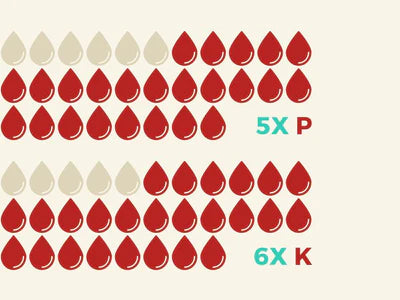
Compared to conventional fertilisers (largely developed pre-2000s for 'fish tanks' with simpler / hardy plants):
- 3X more concentrated for demanding species (in terms of total soluble elemental fertiliser per ml)
- 2X more nitrate limiting for richer colours (in terms of the relative ratio of nitrogen vis a vis other nutrient per ml)
Dose 3ml per 100L daily.
The Standard 300ml Pack comes with a calibrated pump. 1ml per press. Lasts ~3mths for a 30 Gal / 115L tank.
APT's concentrated yet calibrated Capstone Formula allows you to grow the hobby's most demanding plants and also enjoy everyday magic in the simplest tank. 100% Comprehensive NPK, Macro, Micro & Trace elements.
APT 3 is perfect for tanks with more plants, fewer fish. Enjoy 100% comprehensive macro, micro and trace minerals. Unlocks the full potential of the hobby's most demanding plants.
When might APT not work?
In new tanks:
It is normal for tanks less than 6 months old to have various bouts of algae issues, most of which can be avoided with proper cycling prior to planting. APT cannot compensate for inadequate cycling.
It is also normal for plants to take several weeks to adapt. APT helps to speed up the process, but you still need patience. In tanks without CO2, this takes 2-3 months. Adaptation may involve shedding leaves (yes!) and / or having leaves that appear deformed. The hardest, yet most effective response is to tinker less and provide a stable tank environment for the plants to adapt. Look for improvement in NEW LEAVES, not old ones.
In mature tanks:
A mature tank can respond to better nutrition in several ways. The best (and most common) outcome is healthier NEW GROWTH. Old leaves do not rejuvenate even when conditions improve, and may even deteriorate faster.
In rare cases, better nutrition can seemingly trigger algae. This can happen:
(a) if there is prior accumulation of organic waste, especially on mosses and slow growers. When plants adjust to a new nutritional environment, they release proteins that serve as food for algae. The combination of accumulated organic waste + excreted proteins can be a trigger for algae.
(b) if volatile organic matter is released due to replanting or cleaning. In mature tanks, volatile organic matter builds up naturally in the substrate and hard-to-reach corners. When inadvertently released, often coincidentally with improved nutrition, algae can bloom. This can be avoided by performing thorough water change the 2Hr way after replanting / revamping the tank.
(c) if seemingly ‘OK’ plants (especially slow growers like Mosses, Bucephalandra, Crypts, Java Fern, Anubias, Alternanthera species etc.) are actually not as healthy as they appear. Plants often respond to improved tank conditions (better nutrition, or lighting, or CO2…) by accelerating the shedding of older, less healthy leaves. This attracts algae, which help in the decomposition process. Slow growers that are not healthy are especially hard to spot, as they can be in 'Zombie’ states for a long time.
(d) finally, if you are making a drastic change in dosing regime (e.g. very lean to something alot richer, or vice versa), this forces plants to reprogram their cells to adapt, and this process almost certainly triggers algae. A gradual transition over 2-3 weeks often helps. But the longer slow growers have adapted to a particular environment, the harder it is for them to 'switch'.
Ingredients
GUARANTEED ANALYSIS
Total Nitrogen (N)........................................... 0.75%
0.75% Nitrate Nitrogen
Available Phosphoric Acid (P2O5)....................0.69%
Soluble Potash (K2O)....................................... 4.52%
Magnesium (Mg)............................................. 1.10%
Iron (Fe) ...........................................................0.12%
0.12% Chelated Iron
Derived from: Potassium Sulphate, PotassiumPhosphate, Potassium Chloride, MagnesiumNitrate, Magnesium Sulphate, DTPA Iron, EDTAIron, EDDHA Iron
Share