Seachem
Seachem MultiTest Silicate
Seachem MultiTest Silicate
Couldn't load pickup availability
Natural sea water contains about 10 mg/L as silicate. In reef or other marine aquaria, silicate should be 1 mg/L or less. Silicate is non-toxic to fish and invertebrates, but is ideally kept below 1 mg/L to minimize diatomaceous algae. In freshwater, silicate is not critical. Usually, freshwater silicate concentrations will range in the area of 4–20 mg/L.
MultiTest Silicate measures silicates to less than 0.5 mg/L in marine or freshwater. This kit measures soluble silicate and reports it as silicate concentration. To convert to silicon, multiply by 0.3. It performs over 75 tests and contains a reference sample for validation.
- Measures silicates to less than 0.5 mg/L
- Multi-cavity plate for simultaneous testing of up to 6 tests at the same time
- Includes reference for test validation
- Marine and freshwater
Features:
-
75 Tests
MultiTest Silicate performs over 75 tests
And with the multi-cavity test plate, multiple tests can be run at the same time. -
Accuracy
Range - Measures between 0–25 mg/L silicate
Precision - Detectable changes on the color chart in 0.1–1 mg/L & 0.01–0.1 mg/L increments -
Reference Sample
It isn't necessary to run a reference test to use this kit; however, its proper performance can be validated by running a test in the normal manner except that the reference sample is used in place of aquarium sample. You might choose to run a reference test if you have cause to believe the test is giving incorrect results.
Color Chart
All MultiTest test kits come with an easy-to-read color chart. It features a 5 cm viewing window to help isolate color and match as closely as possible to the test sample.
Opaque Multi-Cavity Test Plate
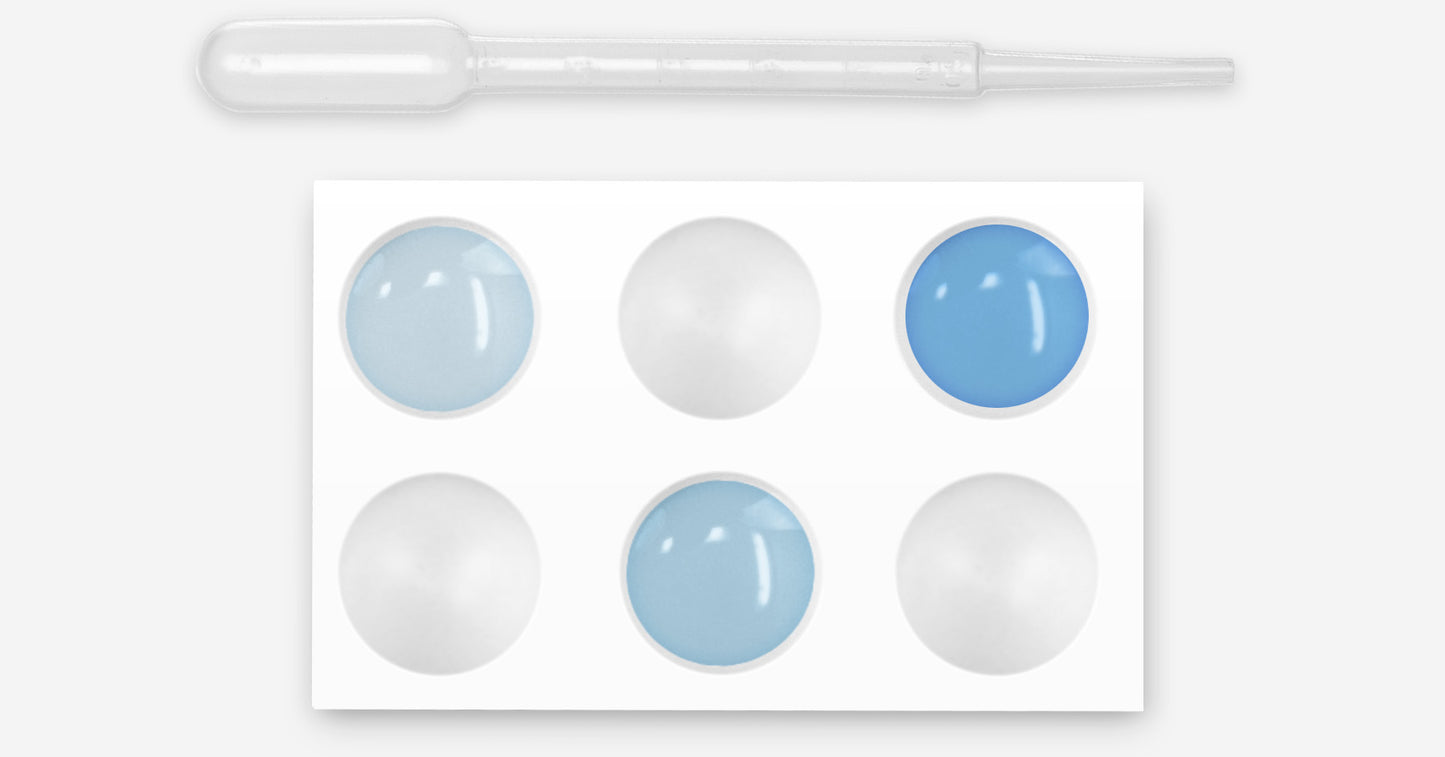
All MultiTest test kits are read from an opaque white test plate. The sliding color chart along with the six-cavity test plate allows for easy reading and comparisons of several samples at the same time.
Safety
KEEP AWAY FROM CHILDREN! This kit is not a toy. Reagents 1a & 1b contain sulfuric and molybdic acids and are corrosive! Reagents are corrosive to skin, metals, and fabrics. Avoid contact. Protect work surfaces with plastic liner or newspaper. If accidental spillage or contact occurs, wash exposed area thoroughly and rinse copiously with water. If eye entry occurs, rinse eyes immediately with water for 10 minutes and then seek medical attention.
Share